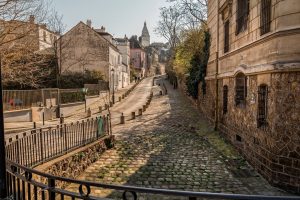
A monumental social fresco of the 19th century, La Comédie Humaine — comprising more than 90 works — revolves around one central theme: money. The character of Rastignac (Le Père Goriot, 1835) is the first major figure of social ascent, where power and wealth intertwine, while merchants, bankers, counts, and dukes appear as recurring characters. And this is no coincidence, since Balzac was obsessed with money all his life — an obsession that led the writer to some rather unusual ventures…
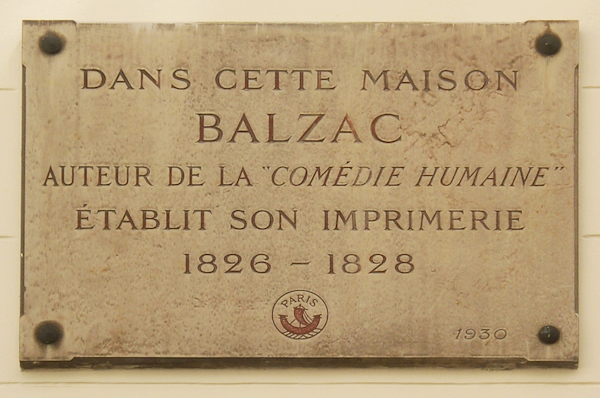
In 1826, he founded a printing house in the Saint-Germain-des-Prés district, on Rue Visconti. A plaque can still be seen today on the building’s façade. Two years later, Balzac could no longer pay his creditors or his workers. He therefore retreated to an apartment on Rue Cassini (in the 14th arrondissement), under a false name. There, he would write some of his most famous novels: Les Chouans (1829), La Peau de chagrin (1831), and Le Père Goriot (1835). La Comédie Humaine was born. Balzac would spend his entire life writing to pay off his debts.
Those debts didn’t stop him from living as lavishly as the greatest fortunes of his time! Passionate about beautiful things, he bought furniture, paintings, and fine clothes. In 1834, he purchased (on credit, of course) a gold-handled cane studded with turquoise from a Parisian goldsmith. Fascinated by the aristocracy and the upper bourgeoisie, he began adding the noble particle “de” to his name from 1836 onward (his father’s name was Bernard-François Balzac). His writing also cost him dearly: he constantly corrected, annotated, and rewrote his manuscripts, forcing him to order new proofs again and again. In short, he was always broke, and despite his prolific pen, his debts only grew larger.
Forced to move frequently to escape his creditors, in 1837 he bought a house in Ville-d’Avray (Hauts-de-Seine). There, he dreamed up… a pineapple plantation! In 1838, he traveled to Sardinia with the intention of investing in a silver mine. Both ventures quickly failed. He had to sell the property in April 1841, leaving behind yet more debts.
Despite all this, Balzac was a tireless worker, living by an almost monastic discipline. He would go to bed around 8 p.m. and rise at midnight to write. His writing sessions could last until 8 or 10 a.m., without leaving his desk. It is said that he could consume up to 50 cups of coffee in a single night.
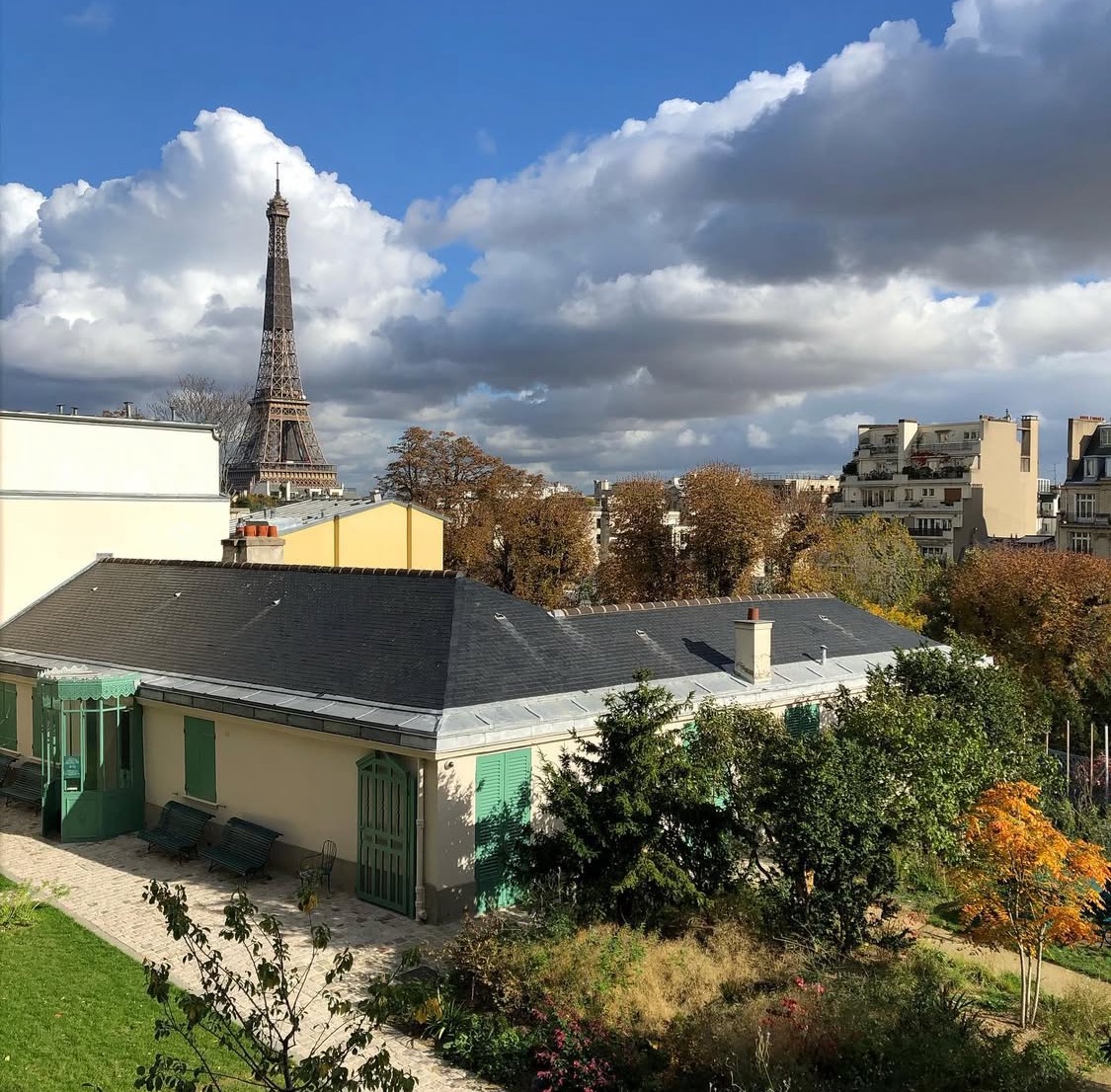
One of his final refuges was the house in Passy, on Rue Raynouard (16th arrondissement) — the only residence of the writer still standing today. He chose it because it had two entrances, allowing him to escape if a creditor appeared at one of the doors! The house is now a museum dedicated to Balzac.
In 1850, he married Evelyne Hanska, a wealthy aristocrat with whom he had maintained an epistolary relationship for… 18 years! His financial troubles should have finally been resolved. But Balzac died just five months after their marriage. The newly widowed Evelyne de Balzac took on her husband’s debts. They now rest together in the Père Lachaise Cemetery.