The Mouzaïa neighborhood, in Paris’s 19th arrondissement, is one of the most pleasant areas in the capital for an off-the-beaten-path stroll. Among its maze of small lanes and peaceful villas lies a distinctive feature: a trio of streets celebrating the French Republic and its motto, “Liberty, Equality, Fraternity.”
A brief historical note if you’re not familiar with the Mouzaïa area: largely developed in the second half of the 19th century, this part of the 19th arrondissement was once a gypsum quarry, the rock used to make plaster. This geological particularity—namely the fragility of the ground—prevented the construction of large buildings, which were instead replaced by small houses built along narrow streets.
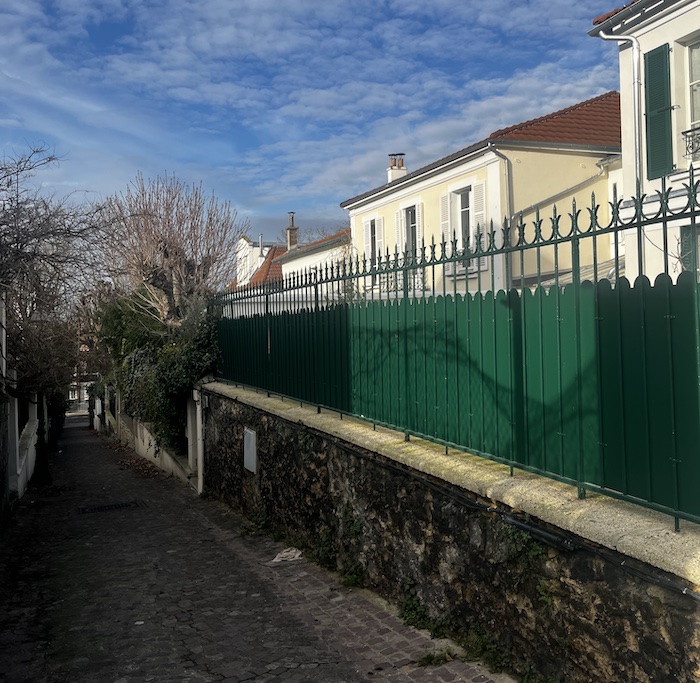
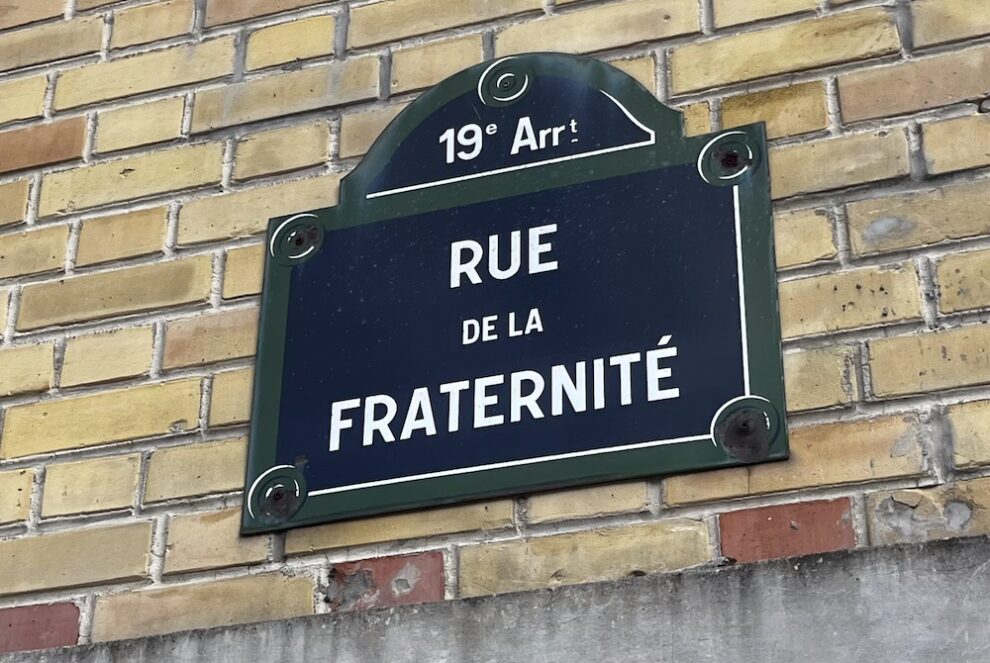
In 1889, an urban development project was approved around Place du Danube. The year 1889 was a significant one, marking the centenary of the French Revolution. It was therefore decided to commemorate the event by giving this new network of streets “republican” names. This is how Rue de la Liberté, Rue de l’Égalité, and Rue de la Fraternité came into being, as well as Rue de la Concorde, now known as Rue Gaston Pinot.
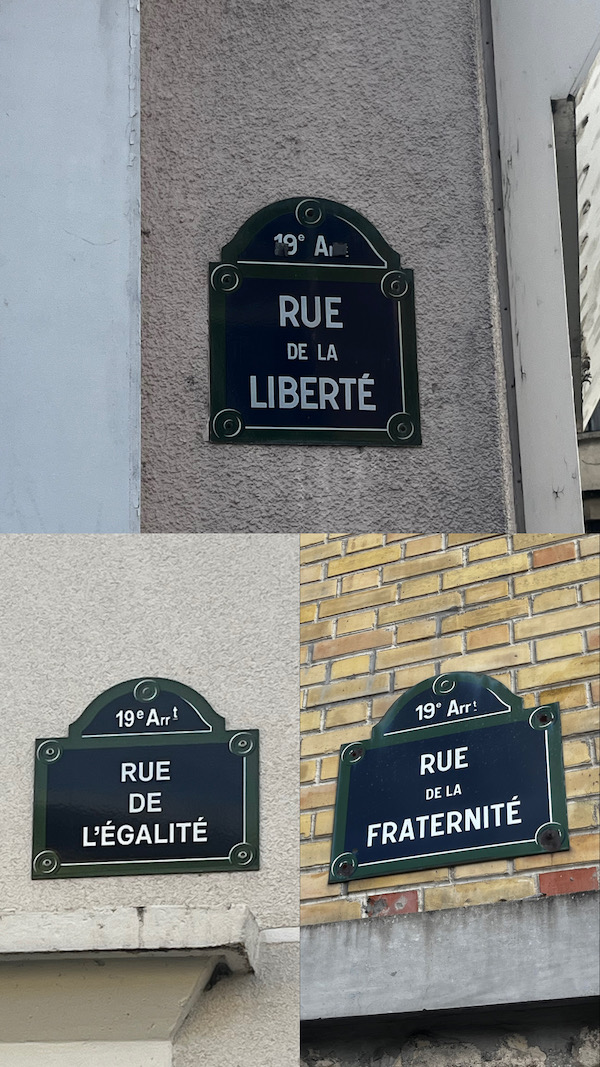
As this period also coincided with the Industrial Revolution, the rise of social issues, and the emergence of the working class, names such as Villa du Progrès, Rue de la Solidarité, and Rue de la Prévoyance appeared. The choice of this neighborhood to bear such street names was by no means accidental. In the 19th century, republican ideals were closely intertwined with those of labor. Political revolution and social revolution were inseparable—ideals that deeply influenced the working classes, who were precisely the population intended to live in this new district.
For the record, the motto “Liberty, Equality, Fraternity” was officially adopted in France on February 27, 1848, and was inscribed on the façades of public buildings under the Third Republic (1879).


Add Comment